
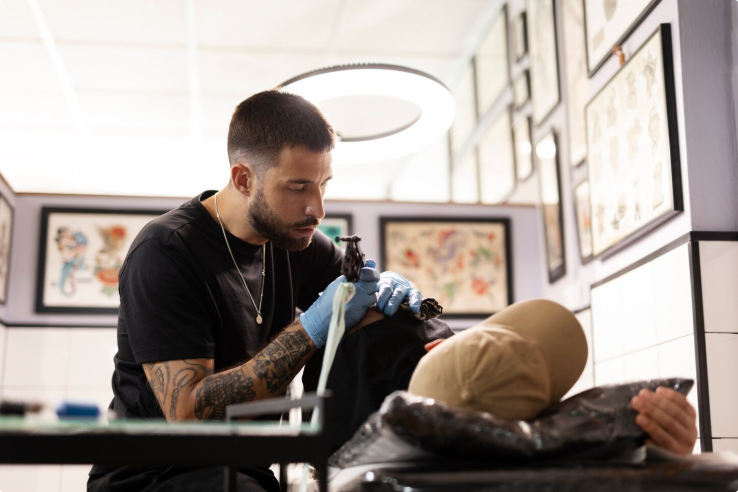
Getting a tattoo is not a simple in-and-out experience for everyone. Walk into any reputable tattoo studio and you’ll quickly notice that two clients sitting side by side can spend dramatically different amounts of time in the chair — one finishing up in 90 minutes, the other stretching across two sessions spanning several hours each. That contrast is not random. It is the result of a complex interplay of factors that experienced tattoo artists account for before they ever put needle to skin.
Understanding what drives session length matters for more than just scheduling purposes. It shapes how you prepare, how much you budget, and whether your overall tattooing experience is manageable or overwhelming. Below is a thorough breakdown of every major factor that determines how long a tattoo session actually takes — backed by professional knowledge and real-world patterns observed across the industry.
The Tattoo Design: Where Time Begins
The single biggest determinant of session length is the complexity and scale of the design itself. A minimalist single-line script on the wrist might wrap up in under an hour. A detailed Japanese sleeve with layered koi fish, waves, cherry blossoms, and shading can require 30 or more hours spread across multiple sessions.
What specifically within a design adds time?
- Line density: Intricate geometric patterns or mandala work with dozens of interlocking lines require precise, slow needle placement.
- Color saturation: Achieving solid, fully saturated color — especially in large fill areas — demands multiple passes over the same skin.
- Shading and gradients: Smooth transitions from dark to light require significant technique and time, particularly in realism-style tattoos.
- Fine detail: Micro-realism portraits, botanical illustrative work, and photorealistic animal tattoos are among the most time-intensive styles in modern tattooing.
According to Healthline’s overview of tattoo safety and process, designs that require the artist to frequently switch needle configurations or ink colors also add meaningful time to any session.
Tattoo styles and their typical time demands:
| Style | Relative Time Demand | Reason |
|---|---|---|
| Simple line art / minimalist | Low | Minimal passes, no fill |
| Traditional / neo-traditional | Moderate | Bold lines with defined color blocks |
| Watercolor | Moderate–High | Blending and layering |
| Blackwork / geometric | High | Dense linework, precision |
| Realism / portrait | Very High | Extreme detail and shading |
| Full sleeve or bodysuit | Extremely High | Scale, complexity, and multiple sessions |
Placement on the Body: Not All Skin Is Equal
Tattoo placement has a profound effect on session duration for reasons most clients don’t initially consider. The skin on different parts of the body varies dramatically in thickness, elasticity, and sensitivity — and each of these factors affects how the needle interacts with tissue and how quickly the artist can work.
Areas where the skin lies directly over bone — the shin, ribs, collarbone, and spine — are notoriously difficult. The lack of cushioning causes significant discomfort, which can slow the pace of work as clients need more frequent breaks. The American Academy of Dermatology notes that skin thickness varies considerably across the body, which also influences how ink settles and how many passes an area requires.
Highly vascular or mobile zones — such as the hands, feet, elbows, and knees — present technical challenges that increase session time as well. Ink in these areas tends to spread or heal inconsistently, requiring additional care and sometimes more corrections during the session itself.
Curved and muscular areas like the upper arm or thigh, by contrast, are among the most efficient to tattoo. The skin stretches predictably, holds ink reliably, and allows the artist to move at a consistent pace. This is one reason that upper arm pieces are often completed faster than similarly sized tattoos placed on the ribs or ankle.
Skin Type and Condition: The Canvas Beneath the Ink
Every artist is essentially working on a living, reactive surface, and the characteristics of that surface vary from person to person. Skin type — including factors like texture, tone, elasticity, hydration, and any existing scarring — directly affects how easily ink is deposited and how long the process takes.
Dry or dehydrated skin is more resistant to ink absorption. The needle may need to make additional passes to achieve the desired saturation, adding time. This is one reason artists consistently recommend that clients moisturize their skin in the days leading up to a session.
Scar tissue is particularly challenging. Whether from surgery, injury, or previous tattoos, scar tissue is denser and less uniform than regular skin. Tattooing over it is slower, more unpredictable, and often requires specialized techniques. The Journal of Clinical and Aesthetic Dermatology has published research on how scar characteristics affect cosmetic procedures including tattooing.
Skin tone also plays a role. Darker skin tones may require adjustments to needle depth and ink selection to achieve accurate color rendering, which can add time particularly for color tattoos. A skilled artist working with diverse skin tones will plan session pacing accordingly.
Sun-damaged or aging skin loses elasticity over time. This means the skin moves and compresses differently under the needle, requiring the artist to work more carefully to achieve clean, consistent linework.
The Artist’s Speed, Technique, and Experience
Two artists working on identical designs may produce vastly different session times — and that difference is not necessarily a quality indicator in either direction. Experienced artists often work with deliberate, measured pacing rather than rushing. Speed is never the goal; precision is.
That said, experience genuinely does reduce wasted motion. A seasoned artist who has tattooed hundreds of sleeves knows exactly how to position themselves, set up their workspace, and sequence the work to minimize fatigue and maximize efficiency. According to Inked Magazine, many veteran artists develop a rhythm that allows them to maintain consistency across multi-hour sessions in ways that newer artists are still building toward.
The type of machine being used also matters. Rotary machines and coil machines each have different stroke mechanics that affect how quickly ink is deposited. Some artists prefer the precision of a rotary for fine-line work, while others use coil machines for traditional shading. Each choice has time implications depending on the work being done.
Quick Comparison: Factors That Speed Up vs. Slow Down Sessions
| Factor | Speeds Up | Slows Down |
|---|---|---|
| Design complexity | Simple, minimal design | Highly detailed, realistic, full color |
| Skin condition | Hydrated, healthy skin | Dry, scarred, or sun-damaged skin |
| Body placement | Fleshy, stable areas (thigh, upper arm) | Bony, mobile, or sensitive areas (ribs, hands) |
| Client tolerance | High pain tolerance, minimal breaks | Low tolerance, frequent breaks needed |
| Artist experience | Veteran with efficient technique | Less experienced, still developing flow |
| Session preparation | Well-rested, fed, hydrated client | Tired, fasted, or anxious client |
| Design finalization | Design finalized pre-session | Design adjustments during appointment |
| Color palette | Black and grey only | Multi-color requiring frequent changes |
Client Pain Tolerance and the Break Factor
One of the most underappreciated factors affecting session length is the client’s pain tolerance and overall endurance. Tattooing involves continuous skin trauma, and the body’s response to that — through adrenaline, endorphins, and eventual fatigue — directly shapes how long any given session can productively last.
Clients who have never been tattooed or who are getting work done on particularly sensitive areas often need more frequent breaks. This is entirely reasonable and professional artists plan for it. However, it does extend the total time in the studio. A four-hour session on the clock might deliver only three hours of actual tattooing when breaks, position adjustments, and recovery moments are factored in.
Research on pain management during tattooing indicates that psychological preparation and physical readiness play meaningful roles in how well the body tolerates the process. Clients who arrive having eaten a balanced meal, slept well, and stayed well-hydrated consistently report better experiences and require fewer prolonged breaks than those who arrive anxious or fasted.
The mental dimension is equally real. Anxiety tightens muscles, which makes skin harder to work with, increases perceived pain, and leads to more involuntary movement — all of which slow the artist’s progress. Studios that create a calm, communicative environment often find that their clients endure sessions more effectively as a result.
Size: The Most Obvious Factor, Explained in Full
While size seems self-evident, it interacts with other factors in ways that compound the time equation. A large, simple design may take less time than a small but extremely detailed piece. But generally speaking, physical size remains one of the strongest predictors of session length.
Most tattoo artists operate with a rough industry baseline: a moderately complex piece the size of a fist might take two to four hours. A half-sleeve (covering roughly half the upper or lower arm) typically spans eight to fifteen hours across multiple sessions. A full-body suit — legs, torso, arms, and back — can represent hundreds of hours of cumulative work over years.
Artists at studios like Bang Bang NYC, known for high-profile celebrity work, often schedule multi-day intensive sessions for large-scale pieces, particularly when clients travel for the work. This reflects the practical reality of scaling ambitions against physical endurance limits.
Ink Color and Saturation Requirements
Black and grey tattoos almost universally take less time than their full-color counterparts. The reasoning is straightforward: single-pigment work requires fewer needle and ink changes, fewer passes to achieve saturation, and less planning around color interaction.
Color tattooing is a different discipline. Layering colors to produce vibrancy, preventing muddying of adjacent hues, and ensuring even saturation across a large area all require additional time and technical care. Certain pigments — particularly whites, yellows, and light pastel tones — are notoriously difficult to saturate into skin and often require multiple passes.
The Society of Permanent Cosmetic Professionals highlights how pigment formulation and skin interaction vary significantly, a reality that experienced tattoo artists manage with careful product selection and technique adjustment that adds to overall session time.
Session Length Maximums and the Multi-Session Reality
There is a physiological ceiling on productive tattooing in any single sitting. Most experienced artists cap standard sessions at four to six hours for a reason. Beyond that threshold, several things happen simultaneously: the skin becomes increasingly traumatized and stops accepting ink as cleanly, the artist’s precision begins to decline due to fatigue, and the client’s ability to remain still and composed deteriorates.
This is why large-scale pieces are almost always divided across multiple sessions, even when a client theoretically wants to power through. The American Tattoo Society recommends spacing sessions at least two to three weeks apart to allow for proper healing before additional work is done in the same area.
For clients hoping to minimize their total number of sessions, the best strategy is not to push sessions to exhaustion — it is to arrive well-prepared for each one, choose an experienced artist with efficient technique, and allow proper healing intervals between visits.
Pre-Session Preparation: How Clients Affect Their Own Timeline
The time a session takes is not entirely out of a client’s hands. Several preparation steps have measurable impacts on how smoothly the work progresses.
Hydration is the most consistently cited factor by working artists. Well-hydrated skin accepts ink more readily and heals faster. The recommendation is to increase water intake in the 24–48 hours before a session.
Nutrition is equally important. Arriving with stable blood sugar prevents lightheadedness, which can force unplanned stops. A balanced meal two to three hours before the session is a widely observed best practice.
Avoiding alcohol for at least 24 hours prior is important beyond the studio’s policy reasons — alcohol thins the blood, which causes more bleeding during the tattoo process. Excess bleeding pushes ink out of the skin as it is deposited, requiring more passes to achieve saturation and visibly extending session time.
Moisturizing the skin in the days before the appointment conditions it to accept ink more effectively. Chronically dry or flaking skin is more resistant to tattooing and requires more care from the artist.
Finalizing the design before arriving — not requesting major changes at the start of the appointment — preserves time that would otherwise be spent on redesign consultation and reprinting stencils.
FAQ: Common Questions About Tattoo Session Duration
How long does an average tattoo session last? Most standard tattoo sessions run between two and five hours. Smaller, simpler pieces may take under an hour, while large or complex work is typically split across multiple sessions of three to six hours each.
Can I make a single session shorter by choosing a simpler design? Yes. Minimalist designs — fine-line scripts, simple symbols, or small geometric shapes — are among the fastest to complete. Keeping the design small and line-focused dramatically reduces time in the chair.
What is the longest recommended single tattoo session? Most professional artists recommend capping sessions at six hours. Some experienced clients and artists may extend to eight hours for intensive large-scale projects, but this is not standard and requires exceptional client endurance.
Does the tattoo artist’s speed matter? Technique and efficiency matter more than raw speed. An experienced artist who works with precision typically delivers more consistent results in less effective time than a faster artist who must correct or redo areas.
Does my skin color affect session length? It can, particularly for color tattoos. Artists working on darker skin tones may take additional time to select appropriate pigments and ensure colors render accurately, but this varies significantly by artist and design.
Will breaks add significantly to my session time? Breaks add real time, but they are often necessary and should not be avoided. A client who pushes through pain without breaks may produce poorer results (due to involuntary movement) than one who takes a few short rests.
Does touch-up work take as long as the original session? Touch-ups are typically shorter, but this depends on the scope. Small fill corrections may take 30–60 minutes, while significant touch-ups to a large piece can run several hours.
Can I speed up the session by skipping breaks? Attempting to skip breaks typically backfires. Fatigue increases involuntary movement and skin reactivity, both of which slow the artist’s effective pace and may compromise the quality of the final result.
Conclusion: Planning Around What You Now Know
Tattoo session duration is not a mystery — it is the product of well-understood, intersecting factors that professionals work with every day. The design’s complexity, the placement on the body, the condition of the skin, the client’s preparation and endurance, the artist’s technique, and the ink palette all contribute in measurable ways to how long any given session takes.
For anyone planning a new tattoo, this knowledge is genuinely useful. It means that a realistic conversation with the artist before booking is not just helpful — it is essential. An experienced artist can assess a design, consider placement, discuss your experience level, and give a grounded estimate of both session length and the number of sessions required.
It also means that preparation is not optional. The single most controllable variable in session duration is how well-prepared the client arrives. Hydrated, fed, rested, with a finalized design and realistic expectations — that combination sets up the most efficient and comfortable possible session.
Tattooing is a craft that deserves patience and respect. Rushing it — whether by cramming too much into a single session or arriving unprepared — rarely produces the outcome anyone wants. Understanding the factors at play allows clients and artists to collaborate around them, producing work that is both excellent and achieved in a timeframe that respects the process.
The chair is not a place to rush through. It is where, with the right preparation and the right artist, something permanent and meaningful takes shape — and that kind of work is worth every minute it takes.
Disclaimer: Session duration estimates mentioned throughout this article reflect general industry patterns and professional observations. Actual times vary based on individual circumstances. Always consult directly with your chosen artist for an accurate estimate specific to your design and placement.