
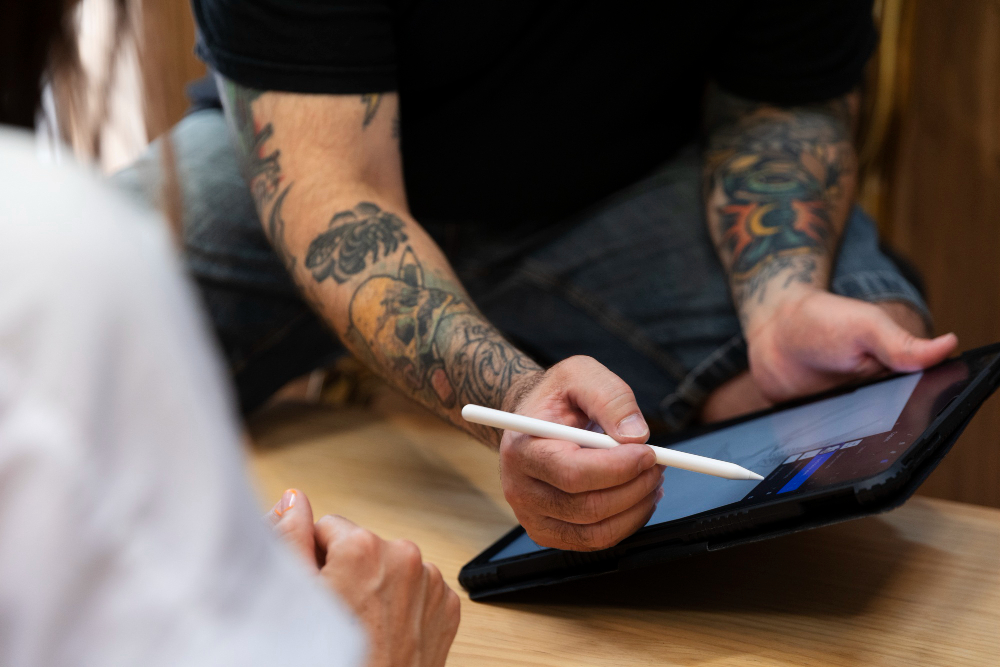
Deciding to get a custom tattoo is a significant commitment, both creatively and financially. Unlike walking into a studio and selecting a pre-drawn design from the wall, custom tattoos involve a collaborative process between you and the artist—consultations, sketches, revisions, and eventually the permanent placement of your vision on your skin. Understanding the true cost of this experience requires more than a simple number. This guide breaks down every aspect of custom tattoo pricing in 2026, from the factors that drive costs to real-world examples and strategies for managing your budget.
Understanding Custom Tattoo Pricing in 2026
The tattoo industry has undergone notable shifts in recent years, with pricing structures becoming more sophisticated and transparent. Unlike generic pricing models, custom work reflects not just the tattooing itself but the entire artistic process leading up to it. In 2026, custom tattoo costs have stabilized in clear ranges based on multiple variables, though significant variation exists depending on location, artist experience, and design complexity.
According to current industry data, custom tattoo design fees typically range from $75 to $300 per hour, while the actual tattooing work follows separate pricing based on hourly rates or package deals. This separation of design work from execution time is crucial to understanding your total investment.
The Core Factors That Determine Custom Tattoo Costs
Artist Experience Level and Reputation
The artist holding the needle is the single most important factor in your tattoo cost. The tattoo industry operates on a clear tier system, and pricing directly reflects an artist’s skill level, portfolio quality, and demand.
Junior or Apprentice Artists typically charge between $50 and $130 per hour. These artists are actively building their portfolios and may take longer to complete work. While their rates are attractive, the trade-off is often extended session times and potentially less refinement in the final result. An apprentice is still developing techniques and may work more cautiously than experienced counterparts.
Established or Mid-Level Artists generally charge $150 to $300 per hour. This tier represents artists with several years of professional experience, strong portfolios, and consistent positive client feedback. At this level, you’re paying for demonstrated skill, understanding of body placement, color theory, and healing dynamics. Artists in this range typically work efficiently, meaning your total session time is minimized compared to apprentices charging per hour.
Specialist or Elite-Tier Artists command $300 to $500+ per hour. These professionals have often won industry recognition, specialize in technically demanding styles like photorealism or biomechanical work, and maintain lengthy waiting lists. Their expertise isn’t just technical—it includes understanding how tattoos age, maintaining color vibrancy, and executing designs with precision that withstands time.
Urban studios in major cities like Los Angeles, New York, and London often charge up to 50% higher rates than equivalent artists in smaller markets. This reflects higher overhead costs, increased local demand, and often the concentration of award-winning artists in these areas.
Design Complexity and Style
The complexity of your custom design directly impacts both the design fee and the tattooing time required. Simple designs—think minimalist line work or basic lettering—require less consultation time and fewer revisions. A straightforward custom design might only need one or two hours of design work before moving to the stencil phase.
Intricate custom work tells a different story. Complex designs featuring multiple elements, intricate shading, fine details, or layered imagery demand extensive consultation. An artist may spend 3 to 8 hours on design work alone, meeting with you, gathering reference images, creating initial sketches, incorporating your feedback, and producing the final stencil design. This consultation and revision process is where much of the custom design fee accumulates.
The style you choose also influences pricing. Photorealistic portraits typically cost around $200 per hour, while watercolor designs might start at $400 for even modest pieces due to the technical skill required to execute the soft, flowing aesthetic convincingly. Traditional Japanese or biomechanical work similarly commands premium rates because these styles require specialized knowledge and experience.
Size and Body Placement
Tattoo size is measured in inches across the design, and larger pieces naturally require more time and therefore higher costs. A simple rule of thumb: every additional inch of width or height typically adds 30 to 60 minutes to the session time, depending on complexity.
Small tattoos (1 to 3 inches) typically range from $50 to $300, though these often hit the artist’s minimum charge—commonly $100 to $150—even if the design could technically be completed faster. This minimum protects the artist’s time and ensures they’re maintaining professional standards for setup, aftercare consultation, and cleanup.
Medium tattoos (4 to 6 inches) fall into the $300 to $1,000 range. At this size, custom work becomes more economical as a percentage of the artist’s hourly rate. You’re paying more in absolute terms, but the per-hour cost often decreases because the artist isn’t dealing with multiple tiny details that disrupt workflow.
Large custom designs (7+ inches) start at $700 and easily exceed $3,000 depending on detail level and artist experience. Full sleeves and extensive back pieces represent the premium end of the market, ranging from $2,000 to $7,000 or more.
Body placement adds another layer to pricing. Certain areas of the body are more challenging to work on, requiring greater precision, different angles, or specialized handling of sensitive skin. Areas like the ribs, neck, hands, and inside of the wrist typically incur a placement surcharge because they’re more painful, more difficult to execute cleanly, or require the artist to work in physically awkward positions. These areas might add 20 to 40% to the base hourly rate.
Conversely, areas like the forearm, outer arm, and thigh are considered easier placements and might offer slightly discounted rates or faster execution times that reduce your overall cost.
Color Versus Black and Gray
The choice between black and gray work and color tattoos meaningfully impacts cost. Color tattoos require the artist to manage multiple ink bottles, constantly change needles and settings, and demonstrate broader technical knowledge. The learning curve for consistent color work is steeper than black and gray, meaning artists charging for color work are typically more experienced.
Color pieces typically cost 15 to 30% more than their black and gray equivalents due to the additional time required and the technical skill involved. A medium-sized custom design in black and gray might cost $400, while the identical design in full color could run $500 to $600.
Pricing Models: How Artists Structure Costs
Understanding how your artist prices their work helps clarify what you’ll actually pay. Most tattoo professionals use one of three primary pricing approaches.
Hourly Rates
Many artists, especially those doing custom work, charge by the hour. This approach offers transparency—you know the hourly rate, you discuss estimated duration, and you pay based on actual time spent. For a custom design requiring a 3-hour session with a $200-per-hour artist, you’d expect to pay approximately $600 before aftercare supplies or tips.
Hourly pricing works well for custom projects because it accounts for the unpredictability of custom work. If your design requires additional shading or detail work mid-session, the artist can adjust without renegotiating prices.
Flat Rates or Package Deals
Many established artists use flat-rate pricing for entire custom pieces. Rather than charging by the hour, they quote a total price that encompasses design work, the session, revisions, and sometimes even one complimentary touch-up. This approach appeals to clients because it eliminates surprises and allows for better budgeting.
Flat-rate pricing typically assumes the artist has accurately estimated the time required based on design complexity. For this reason, artists often require a deposit—typically 25 to 30% of the total cost—to secure the appointment and ensure the client is committed.
Half-Day and Full-Day Rates
For larger custom projects, studios and artists often quote using half-day (typically 4 hours) or full-day (typically 8 hours) rates. Half-day rates for established artists might range from $600 to $1,200, while full-day rates run $1,200 to $2,400 or more.
This model makes sense for extensive custom work like sleeves, back pieces, or large portrait work that requires multiple sessions. It also encourages artists to work efficiently since they’re not tracking minutes but managing the full session arc.
Custom Design Fees: What You’re Actually Paying For
A critical component of custom tattoo cost that deserves specific attention is the design fee. This is separate from—and in addition to—the actual tattooing work.
When you hire an artist for a custom design, you’re paying for their expertise in translating your ideas into visual form. This includes the initial consultation where you discuss your vision, reference images, inspiration, and placement. It includes preliminary sketches, sometimes multiple rounds of revisions based on your feedback, and finally the creation of the stencil used for the actual tattooing.
Artists typically spend 1 to 8 hours on design work for custom pieces, depending on complexity. At $75 to $300 per hour for design work, a moderately detailed custom tattoo might include $300 to $1,000 in design fees alone before the artist even begins tattooing.
Some artists include design work in their overall session rate, particularly if the project is a larger flat-rate piece. Others charge design time separately and may deduct a portion from the final tattoo cost if you proceed. Always clarify this upfront during your initial consultation.
Geographic Variation: Location Matters Significantly
The United States presents perhaps the most dramatic pricing variations in the global tattoo market. Experienced artists in major urban areas charge as much as $350 per hour compared to the national average of $150 to $210. This isn’t simply markup—it reflects genuine overhead differences including higher rent, staff costs, and the concentration of award-winning artists in metropolitan areas.
A custom sleeve tattoo in Los Angeles or New York might run $3,500 to $5,500, while the identical project with an equally skilled artist in a smaller Midwestern city could cost $2,000 to $3,000. Both artists may be equally talented; the difference reflects local market conditions and operational costs.
International pricing varies even more dramatically. European cities like London and Paris maintain high hourly rates comparable to major US cities. Conversely, developing nations with strong tattoo communities—Thailand, Philippines, Brazil—offer significantly lower rates while still maintaining professional standards, though traveling for tattoo work introduces additional costs including flights and accommodation.
Breaking Down Custom Tattoo Costs by Size
To illustrate how custom tattoo costs accumulate in practice, examining specific size ranges clarifies what you should expect to budget.
Small Custom Tattoos (1-3 inches)
Small custom designs typically start at $100 to $200 for the design fee alone, assuming simple complexity. A modest custom piece—say, a small portrait, personalized symbol, or short phrase in a custom font—might incur 1 to 2 hours of design work at $100 per hour, bringing design costs to $100 to $200.
The actual tattooing might take 30 minutes to 1.5 hours depending on detail. At an established artist’s rate of $200 per hour, you’re looking at $100 to $300 for the session itself. Total cost for a small custom piece typically ranges from $250 to $500.
Medium Custom Tattoos (4-6 inches)
Medium custom designs represent a sweet spot for value in custom work. These pieces are substantial enough to showcase detail but small enough to complete in one or two sessions. Design work typically requires 2 to 4 hours, adding $150 to $400 in design fees.
Tattooing time for a medium custom piece generally ranges from 2 to 4 hours depending on complexity and placement. At an established artist’s $200-per-hour rate, you’re looking at $400 to $800 for the session plus $150 to $400 in design fees, totaling $550 to $1,200. Many artists quote these as flat rates—say, $800 all-inclusive—to simplify budgeting.
Large Custom Designs (7+ inches)
Large custom pieces enter territory where flat rates and package pricing become more common than hourly billing. A custom back piece or large arm tattoo might require 6 to 12 hours of tattooing spread across multiple sessions, plus 4 to 8 hours of design work.
At established artist rates, design fees might run $400 to $800, and tattooing costs could range from $1,200 to $2,400+ depending on complexity. Total costs for large custom work typically fall between $1,800 and $4,000, though highly specialized artists or award-winners may quote higher.
Additional Costs Beyond the Basic Tattoo
Understanding your full financial commitment requires accounting for expenses beyond the core tattooing service.
Deposit and Consultation Fees
Most artists charge a deposit to secure your appointment—typically 25 to 30% of the quoted price. This deposit protects the artist’s time and demonstrates your commitment. Some artists apply the deposit toward your final bill; others treat it as a non-refundable booking fee. Clarify this policy before paying.
Some studios charge consultation fees separate from deposits, particularly if the initial consultation is extensive or if the artist conducts multiple rounds of design revisions. Consultation fees typically range from $50 to $150 but are often credited toward your final bill if you proceed.
Aftercare and Touch-Ups
Proper aftercare is essential for tattoo longevity, and costs add up. High-quality aftercare products—specialized soaps, balms, and ointments recommended by your artist—might cost $30 to $60 depending on brands and quantities. Professional-grade aftercare products that help maintain color vibrancy and ensure proper healing are worth the investment.
Most artists include one complimentary touch-up session within a specified timeframe (typically 3 to 6 months) if healing issues arise. Additional touch-ups beyond this period typically cost $50 to $150 per session depending on the touch-up’s scope and the artist’s current rates.
Tipping
In the United States and Canada, tipping is standard practice in the tattoo industry. Customary tips range from 15 to 25% of the total cost, similar to restaurant tipping norms. For a $1,000 custom tattoo, an appropriate tip would be $150 to $250. This isn’t mandatory, but it’s expected as recognition of the artist’s skill and effort.
Tipping practices vary significantly by country. Most European countries don’t expect tips, instead building fair wages into the quoted price. Research local customs if getting tattooed internationally.
Design Revisions and Additional Consultations
Some artists include unlimited revisions in their custom design process, while others charge for revisions beyond a certain number. Clarify revision policies upfront. If you anticipate needing substantial revisions or multiple consultation rounds, factor this into your design fee budget.
Pricing Comparison by Tattoo Type
Different tattoo styles command different price points due to varying technical requirements and artist specialization.
| Tattoo Style | Complexity Level | Price Range (Custom) | Why This Range |
|---|---|---|---|
| Minimalist/Line Work | Simple | $75–$300 | Requires minimal time; clean lines are relatively quick to execute |
| Traditional/Old School | Moderate | $150–$400/hr | Bold lines and consistent color require skill but aren’t hyper-detailed |
| Black and Gray Realism | High | $200–$500/hr | Demands extensive shading, blending, and anatomical precision |
| Color Realism/Portrait | Very High | $250–$600/hr | Requires mastery of color theory, subtle transitions, and fine detail |
| Watercolor | High | $200–$500/hr | Soft transitions and organic appearance demand specialized technique |
| Japanese/Oriental | Moderate to High | $150–$400/hr | Traditional techniques and cultural knowledge add value |
| Biomechanical | High | $200–$500/hr | Requires understanding of mechanical elements and anatomical integration |
| Geometric/Mandala | Moderate | $100–$350/hr | Detail-intensive but follows structured patterns |
This table demonstrates how technical demand and artist specialization directly correlate with pricing. A minimalist custom tattoo might be completed in a single hour-long session, while a photorealistic portrait of the same size could require multiple sessions and much higher artist expertise.
Frequently Asked Questions About Custom Tattoo Costs
How much should I expect to pay for a small custom tattoo?
Small custom tattoos (under 3 inches) typically cost $250 to $500 including design work and tattooing. This assumes an established artist and moderate complexity. Very simple designs might cost less; detailed work could exceed $500.
Are custom tattoos always more expensive than flash designs?
Yes, generally. Flash designs (pre-drawn artwork available in the studio) require no design time, making them significantly cheaper—often $50 to $300 depending on size and artist. Custom work involves design consultation and creation, adding $100 to $1,000+ depending on complexity.
What’s included in the design fee?
Design fees typically cover initial consultation, preliminary sketches, your feedback and revisions, refinement, and final stencil creation. The extent of revision rounds and consultation hours varies by artist—clarify this when discussing pricing.
Should I negotiate tattoo prices?
Professional tattoo artists rarely negotiate their rates, and attempting to do so can signal that you don’t respect their expertise. However, you can discuss your budget and ask if the artist can simplify the design to reduce time. Most professionals will work with you to create something within your means.
Do deposit amounts go toward the final bill?
This varies by artist. Most apply deposits toward your final cost, reducing what you owe on the day of tattooing. Some treat deposits as non-refundable booking fees. Clarify this before paying your deposit.
How much should I budget for a sleeve tattoo?
Custom sleeve pricing varies dramatically based on the design’s complexity and the artist’s experience. Half sleeves typically cost $1,000 to $3,500 for high-quality work, while full sleeves range from $2,000 to $7,000+. Elite artists may quote even higher rates. Factor in 10 to 20 hours of tattooing across multiple sessions.
What’s the typical timeline from consultation to completion?
Initial consultation might take 1 to 2 hours. Design work follows over the next 1 to 3 weeks depending on artist schedule and revision rounds. Tattooing sessions depend on size—small pieces in one session, sleeves across 3 to 6 sessions spaced several weeks apart for healing.
Can I finance a custom tattoo?
Yes. Many studios partner with fintech companies offering tattoo-specific financing plans with competitive interest rates. Personal loans and credit cards also work. However, carefully consider whether financing makes sense for permanent body art—ensure you absolutely love the design before committing.
Do artists offer discounts for multiple tattoos or package deals?
Some do. If you’re planning multiple pieces or a full sleeve, discuss package pricing during your consultation. Artists may offer modest discounts (5 to 15%) for committing to multiple sessions, but significant discounts are rare since professional tattoo work commands premium pricing.
Should I travel for a better custom tattoo rate?
Traveling specifically for cheaper rates usually isn’t advisable—you’ll spend more on transportation and accommodation, potentially negating any savings. However, if a particular artist whose work you love is outside your area, the quality difference might justify travel. Research reputation and portfolio thoroughly before committing.
What if I’m unhappy with the custom design before tattooing?
Clarify revision policies before paying your deposit. Most artists include 1 to 3 revision rounds. Beyond that, additional revisions may incur extra fees. If you’re fundamentally unhappy after revisions, you may forfeit your deposit rather than proceed.
Are touch-ups included in the original custom tattoo price?
Most artists offer one complimentary touch-up session within 3 to 6 months if healing issues arise. Beyond that, touch-ups are charged separately at reduced rates—typically $50 to $150 depending on the touch-up’s scope.
Smart Strategies for Managing Custom Tattoo Costs
Research Artists Thoroughly Before Committing
Your first investment should be time, not money. Review potential artists’ portfolios extensively. Look at work in your desired style, examine how their pieces age (older photos show longevity), read client reviews, and check their social media for consistency of quality.
Meet with at least three artists before deciding. Initial consultations are typically free, and this allows you to compare design approaches, communication styles, and pricing structures without commitment.
Define Your Vision Clearly Before the Consultation
The more clearly you articulate your vision before meeting the artist, the fewer revision rounds you’ll need, reducing design costs. Gather reference images showing style, subject matter, color palettes, and placement. Write a detailed description of what you want and why. Provide measurements of the approximate size.
Artists work most efficiently when they understand your vision clearly from the start. Vague requests lead to multiple rounds of revisions and increased design time.
Consider Placement Strategic
Choosing easier-to-tattoo placement reduces costs. Forearms, outer arms, and thighs cost less than ribs, neck, hands, or inner wrist due to the difficulty and pain involved. If budget is a concern, discuss how strategic placement choices might reduce your total cost.
Evaluate Design Complexity Honestly
Be honest about your budget and how much design complexity you can afford. A moderately complex custom design with significant detail work might cost substantially more than a simpler version of the same concept. Your artist can suggest design simplifications that maintain impact while reducing cost.
Ask About Seasonal Promotions or Discounts
While professional artists rarely discount their rates, some studios offer promotions during slower seasons or for booking multiple sessions upfront. It never hurts to ask whether any promotions apply to your project.
Plan for Aftercare and Touch-Ups
Factor aftercare product costs into your budget. A quality aftercare regimen costs $30 to $60 and directly impacts your tattoo’s longevity. Proper healing prevents the need for costly touch-ups down the road.
Why Quality Merits the Investment
Understanding custom tattoo pricing context reveals why professional rates exist. Tattoo artists invest years developing technique, understanding anatomy and skin dynamics, perfecting color theory, and building portfolios. They purchase professional-grade equipment ($3,000 to $10,000+ for quality machines), maintain sterile studio environments meeting health department standards, and carry liability insurance.
Extremely cheap tattoos often reflect corners being cut—rushed design work, lower-quality ink, less experienced artists, or studios with questionable hygiene standards. The adage “you get what you pay for” applies literally to permanent body art. A tattoo you regret spending $500 on costs far more—emotionally and financially—if removal or cover-up work becomes necessary.
Professional custom work, conversely, ages well, maintains color vibrancy, and provides lasting satisfaction. The investment reflects not just the artist’s time but their expertise ensuring your tattoo looks exceptional for decades.
Looking Forward: Tattoo Pricing Trends in 2026 and Beyond
The tattoo industry continues evolving in ways that influence pricing. Several trends are shaping the landscape:
Advanced Technology Integration: Artists increasingly use digital design tools and augmented reality (AR) to preview how tattoos will look on clients’ bodies before needle meets skin. These technologies reduce design iteration time but are built into overall pricing.
Specialized Inks: Bio-compatible, long-lasting inks designed to maintain vibrancy longer and reduce allergic reactions cost more than standard inks. Clients increasingly request these, and studios adjust pricing accordingly.
Improved Techniques: Modern tattoo machines allow more precise work with less skin trauma, resulting in faster healing and more consistent results. Artists leveraging these advances often charge accordingly.
Financing Accessibility: Tattoo-specific financing options continue expanding, making larger custom pieces more accessible to broader audiences. This has stabilized pricing rather than driven increases, as competition for financing-friendly clients intensifies.
Remote Consultations: Digital consultations are becoming standard, reducing travel requirements and opening artists’ services to geographically distant clients. This has slightly increased pricing consistency across regions as previously local markets become national.
Conclusion: Making Your Custom Tattoo Investment
Getting a custom tattoo in 2026 is a well-understood financial commitment with clear pricing structures, transparent cost components, and reasonable expectations. Whether you’re planning a modest 3-inch custom piece for $300 to $500 or a comprehensive sleeve project budgeting $3,000 to $6,000, the fundamental principle remains constant: you’re investing in permanent art from a skilled professional.
The most important consideration isn’t finding the cheapest option but finding the right artist—someone whose style resonates with you, whose portfolio demonstrates consistent quality, whose communication style works for you, and who charges fairly for their experience level. A custom tattoo is fundamentally a relationship between you and an artist, and that relationship’s quality directly correlates with satisfaction.
Start by researching artists whose work inspires you. Schedule free consultations with at least three professionals. Discuss your vision clearly and listen to their design recommendations. Understand their pricing structure and what’s included. Then make an informed decision based on factors beyond cost alone—portfolio quality, artist reputation, and personal connection matter far more than saving a few hundred dollars.
A well-executed custom tattoo that you love for a lifetime provides far better value than a cheaper piece you spend decades regretting. Invest in quality, choose your artist thoughtfully, and approach the process as the artistic collaboration it truly is. Your skin deserves nothing less than the best.